


If you manage a site in Northeast Ohio, you already know winter doesn’t just freeze pavement—it can quietly punish turf, beds, and tree cover. With commercial landscaping in Cuyahoga County, OH, the difference between “getting through winter” and “coming out of winter in good shape” often comes down to how ice is managed, what materials are used, and where snow is placed after every event.
That’s exactly where our team at Green Impressions brings a more technical, trackable approach.
Related: How Commercial Snow Removal in Lorain County, OH, Keeps Entry Routes Clear for Daily Operations
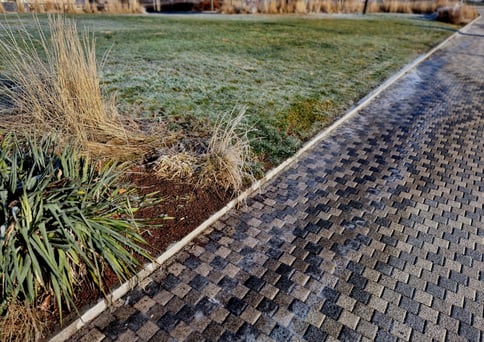
Why Turf Gets Hit Hardest Next To Pavement
Turf damage from de-icing isn’t random. It typically shows up in predictable zones:
- Edges along sidewalks and curbs where meltwater concentrates and refreezes
- Downhill runs and low points where brine and granular products accumulate
- Snow storage areas where repeated loading concentrates salt and grit
- Splash and plow-cast strips where granular material is physically thrown into the grass
Salt injury is often a one-two punch: osmotic stress (roots can’t pull water effectively) plus ion toxicity (especially sodium and chloride). In spring, you’ll see delayed green-up, thinning strips, and dead margins that follow the path of application and plow lines—not circular disease patches.
A Smarter Winter Plan Starts Before The First Storm
The cleanest winter outcomes are built on an anti-icing strategy, not a constant “reactive” cycle. Before the season ramps up, our specialists identify the surfaces and micro-zones on your property that behave differently—sun exposure, wind-swept corners, shaded north faces, and areas that routinely refreeze.
From there, we create a site-specific plan that covers:
- Priority routes and timing expectations
- Snow storage locations that minimize turf exposure
- Targeted ice-control zones (not blanket coverage everywhere)
- Plant protection needs near plow lines and entrances
De-Icer Selection: Matching Chemistry To Conditions (And Landscapes)
Not all “salt” behaves the same, and the wrong product in the wrong place can be rough on turf and plantings. Our team chooses materials based on temperature range, surface type, and adjacent landscape sensitivity.
Here’s how we think about it:
- Sodium chloride (rock salt): Effective around the freezing point, but higher turf risk when overapplied or repeatedly pushed into edges.
- Calcium chloride / magnesium chloride blends: Work at lower temperatures and often require less material by weight, but still need precise rates near turf and beds.
- Liquid brines / pre-wetting: Helps material start working faster and reduces scatter (less product kicked into grass), especially on windy, open sites.
- Low-tracking, site-specific blends: Useful where entrances and high-visibility frontage demand cleaner results without over-application.
The goal isn’t “strongest chemical.” It’s the right material, at the right rate, in the right zone.
Related: How Commercial Snow Removal in Cuyahoga County, OH, Supports Reliable Winter Operations
Application Technique Is Where Turf Is Won Or Lost
Even a good product can create damage if spreaders aren’t tuned. Our winter crews focus on the controls that matter most:
- Calibration and gate settings to prevent heavy bands along edges
- Directional deflectors and edge control to keep granules off turf
- Targeted passes on known refreeze zones instead of repeated full-lot coverage
- Post-plow touch-ups only where residual moisture and shading create recurring ice
We also plan snow placement intentionally. Piling salty snow on turf week after week concentrates chlorides in the root zone and can smother crowns. We designate storage zones and adjust when conditions change.
Protecting Plant Material During Winter Operations
Winter maintenance impacts more than grass. Plow windrows and drying winter winds can stress evergreens and shrubs near hardscape.
When your site calls for it, we use plant material protection like burlap and anti-desiccants to reduce winter burn and salt-laden spray exposure.
What You Can Expect When You Hire Our Team
You shouldn’t be guessing what happened during a storm—or where materials were applied. Our commercial process emphasizes clear documentation and consistent oversight:
- Detailed storm records that include temperature/condition reporting and where equipment and materials were used
- GPS-tracked service activity so arrival/departure timing is accountable and consistent
- Regular check-ins and landscape quality audits to compare current site conditions to expectations and adjust services as winter patterns shift
Spring Transition: Restoring Turf In Salt-Stressed Corridors
When winter breaks, we don’t just switch to mowing and hope for the best. Our specialists evaluate the typical salt-corridors first—walk edges, curb lines, and snow storage zones—then apply a recovery sequence appropriate to your turf type and site conditions.
That can include salt leaching tactics, soil conditioning where sodium has tightened structure, and renovation steps where turf density was lost.
A smarter de-icing plan doesn’t just manage ice—it protects the landscape you’re responsible for, season after season.
Ready to discuss your commercial property landscaping needs? Schedule a consultation today with our experts at Green Impressions Landscaping.
Related: The Value of Commercial Landscaping in Lorain County, OH